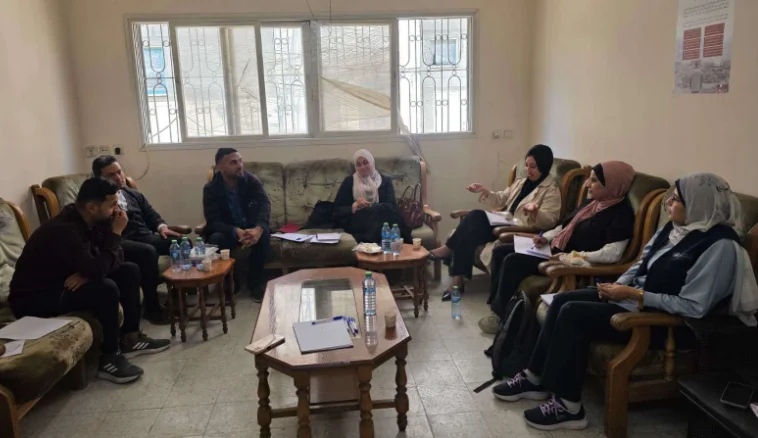
The Palestinian NGOs Network (PNGO) hosted a meeting at its office in Gaza City, bringing together members of the Humanitarian Youth Group (HYGP) and Ms. Hala Rizq, Assistant to the Human Rights Officer at the Protection Cluster. The meeting aimed to familiarise participants with the Cluster's work and priorities and explore ways to strengthen youth participation in protection activities and the wider humanitarian response.
During the meeting, participants learned about the Protection Cluster's structure, roles and responsibilities in coordinating humanitarian efforts. The presentation covered coordination tools, information-sharing procedures and reporting mechanisms, highlighting the importance of avoiding duplication of efforts among humanitarian organisations. It also addressed gaps in protection services and the challenges of reaching vulnerable populations in Gaza, particularly as humanitarian needs continue to change.
The meeting also provided space for an open discussion about the challenges young people face in participating in humanitarian work and the opportunities available for them to become more involved in protection activities. Participants explored ways to increase youth involvement in Protection Cluster meetings and activities, ensure that young people's needs are better reflected in protection programmes, and improve coordination among organisations working on the ground.
The discussion resulted in several recommendations, including greater participation of HYGP members in Protection Cluster meetings and activities, stronger coordination and information sharing between the two groups, and more opportunities for young people to contribute to discussions on protection issues and humanitarian decision-making. Participants also emphasised the importance of holding regular meetings and joint coordination sessions to maintain communication and follow up on shared priorities.
The meeting highlighted the value of direct engagement between young people and humanitarian coordination bodies in Gaza. Such exchanges help young people better understand how humanitarian priorities are identified and how coordination mechanisms operate, while creating opportunities for them to take a more active role in discussions and decisions affecting their communities.
التعليقات (٠)
شاركنا رأيك
سجّل دخولك لتعلّقلا توجد تعليقات بعد. كن أول من يعلّق.